Minding Your Business at Work WORKS

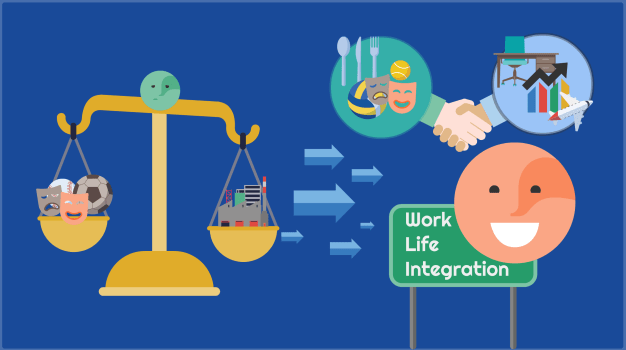
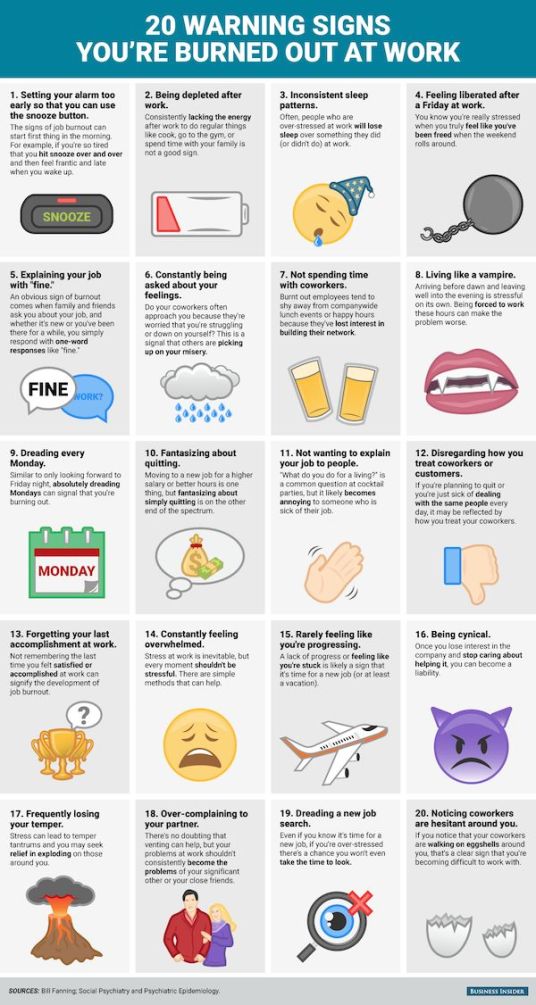
Recently I co-presented a ‘Lunch & Learn’ session on ‘Work/Life Integration and Signs of Burnout.’ It was surprisingly well attended and the presentation I put together on short notice was pretty great, if I do say so myself. Which I do. Thankfully others concurred. I feared; however, that the folks most in danger of burning out probably weren’t in attendance. When you’re on the fast track to burnout you don’t give yourself much time for lunching or learning. Still it was a good sized group and a good conversation.
Work-life-integration-titelbild

We talked about work/life integration vs. work/life balance i.e. having a more holistic approach to the different facets of life, including work, instead of trying to figure out a way to “balance” life with work i.e. giving equal attention to each which rarely works. You CAN have it all, it just won’t be in equal proportions. We talked about the physical, mental and emotional signs of burnout, what you can do to avoid it and what you can do to get out of it. Then we had an open discussion portion. This is where things really got good.

Folks went around the table and shared their thoughts and experiences and I was glad for the openness. As we talked about how some people had been successful (or not) at work/life integration, the topic of flexibility came up – not being tethered to your desk and bound by the clock. #ProductivityOverEverything. At this point one of the attendees mentioned that they thought of flexibility as a generational desire. Tell me more. They indicated that based on their generation (Boomer) and work experiences, they actually had a negative view of people who they saw come into the office after 9am or leave before 5pm. I was grateful for this comment. Grateful because the person felt comfortable enough to share. Grateful because it gave me insight into a different POV which is most likely also held by others. Grateful because it actually related to both of the topics of discussion. Fear of the perceptions of others can be a big part of what leads to employee burnout. Employees often come in early, stay late, take extra work home, etc. because they want to (or don’t want to) be perceived a certain way by their colleagues. Even if it’s not in their own best interest.
burnout

So maybe it’s a generational thing. Maybe it’s a personal thing. I honestly am not a fan of the whole “this generation is like this at work and that generation is like that at work” idea that’s the topic of so. many. articles. But back to the topic at hand — Someone may have had a doctor’s appointment. Or have to pick up their children. Or have worked extra late on a project the night before. Or not be feeling well. Or have arranged with their manager to have a more flexible schedule. Reasons abound. No one is obligated to share the details of their work schedule with their colleagues unless it directly impacts the other person’s work.
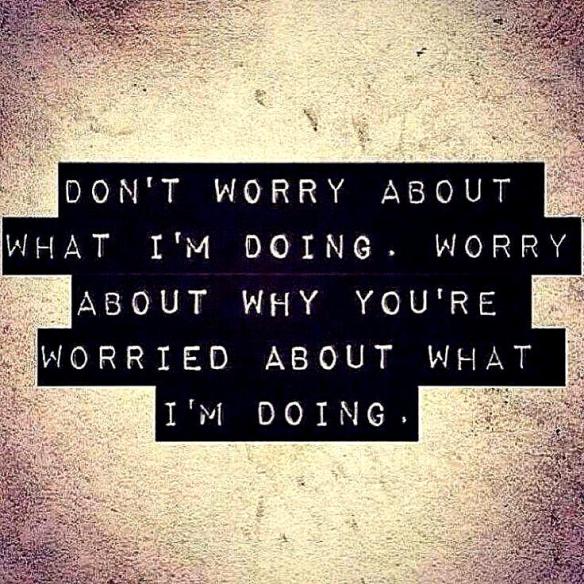
dont-worry-about-what-im-doing-worry-about-why-youre-worried-about-what-im-doing-quote-1

I was also grateful for this comment because it gave me the opportunity to not only hear but to respectfully challenge this person’s thoughts on the issue and show them a different point of view. It gave me the opportunity to encourage everyone in the room to not make assumptions about the work ethic and/or productivity level of their colleagues based on partial facts. We all know what happens when folks make assumptions.

So if you hold outdated, unfounded and/or uninformed beliefs about a colleague based on random criteria and partial information such as the hours you happen to see them in the office, I encourage you to take a step back and ask yourself why. Why do you have this belief? Why does it even matter to you? Then think about how you may have allowed those thoughts to color your interactions with that individual. If the effect has been negative (ex. bias, gossip, mistrust, snooping,) it’s your responsibility to fix it. Fix it = stop it. Understand that everyone is different and has different needs and works differently. Your colleague may be working differently (different schedule, location, etc.) to achieve greater work/life integration and avoid burnout. Which is a good thing. Of course, if all else fails, minding your business works too.
 

You Better Recognize! (Giving Thanks)

tgiving quote

Thanksgiving is the time of year when people are given a free pass to overindulge – in the name of gratitude. We sit around the table with family and friends and spend the day eating.* And eating. And more eating. Often before the first bite of food is taken, attendees are asked to take turns saying what they are thankful/grateful for. Responses usually range from “this food” to “my family/friends/health, etc.” It really depends on the family and their culture/traditions as to how “deep” the responses will be, or if the question will be asked at all. It’s the same for organizations. An organization’s culture will determine the extent to which gratitude is valued and practiced. Healthy, positive work environments  will have gratitude and recognition as an integral part of their culture.

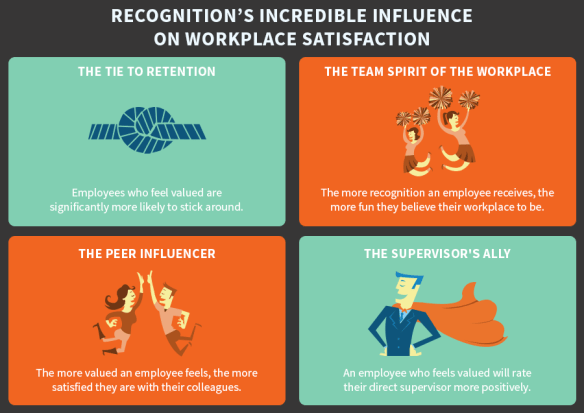
We hear a lot about how important it is to have an “attitude of gratitude.” Some people believe being grateful for and recognizing what you have (as opposed to focusing on what you don’t have) leads to you receiving more of the goodness the universe has to offer. Regardless of your belief system, the same holds true in the workplace. Being grateful for and recognizing what we have in our people results in better morale, productivity, engagement, retention, etc. In other words – all the goodness.

recog

Formal recognition programs and web-based recognition platforms are great to have. They really are. But don’t let the lack of either be an excuse for not recognizing your people and showing them gratitude for sharing their unique talents and skill sets to benefit your organization. A simple, genuine “thank you” goes a long way. Another sometimes overlooked way to show gratitude is by investing in your people. Providing and encouraging professional development opportunities shows that you value and appreciate the people who work for you. This is important for every organization but it is vital in organizations that lack upward mobility/promotion potential. If you can’t recognize a person through a raise or promotion, at the very least, they should have other growth opportunities.

Don’t take people for granted and assume that because they show up every day, all is well. Tell people they’re doing a great job. Tell people you’re happy to have them working for you. Tell people you’re glad they chose your organization to work for. Say “good morning” when you pass people in the hallway. Treat people with respect. Always.

I know no one wants to think about work-y type stuff on a holiday. I get it. But when you’re back in the office, after you’ve filled your stomach to capacity, binge watched at least one show on Netflix and thought about what/who you’re grateful for in your personal life, remember that it’s just as important to show gratitude at work.

Be grateful for your work. I’m talking about beyond the basic “I’m just grateful to have a job.” Don’t get me wrong; I’ve been there before too. I’m not talking about that though. I’m talking about the thing that brings you joy that your job allows you to do. I get joy from helping others, so I remind myself to be grateful for the opportunities I have as an HR professional to help people. Whatever YOUR thing is, the thing that brings you joy at work, be grateful for that. Most importantly, show gratitude for the people you work with. To (very loosely) paraphrase Jay-Z, they could be at any job in the world that day, but they’re there with you. Appreciate it. GIVE THANKS. 

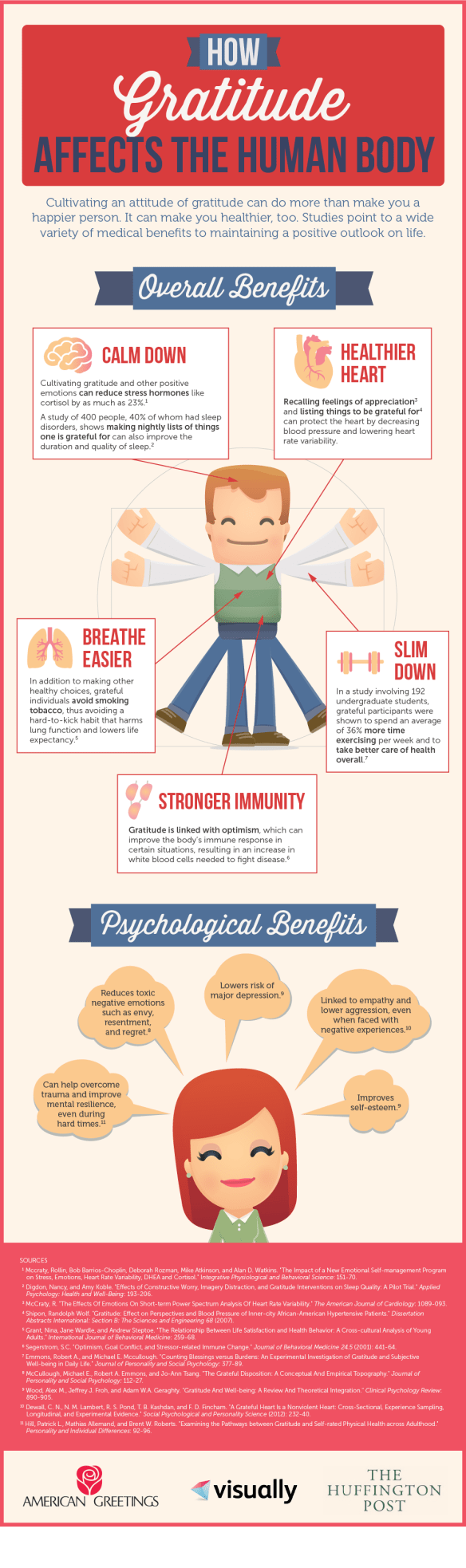
BONUS: In case you needed more of a reason. Do it for your health.

Gratitude_Infographic_v3

*Author’s Note: I realize this is not everyone’s Thanksgiving experience. Please don’t take offense if it is not yours. Maybe you don’t even celebrate Thanksgiving. That’s cool too. The rest of the post will still be relevant to you. – TMR

#NotAThoughtLeader


#SHRMDIV Day 2: Inclusion Paves the Way for Innovation

I nearly filled an entire notepad on day two of the SHRM Diversity & Inclusion Conference, feverishly taking notes on everything from business cases to legal considerations to behavioral science.

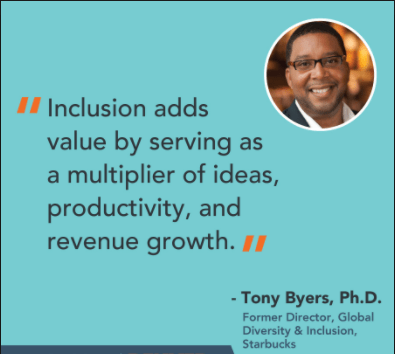
tony byers

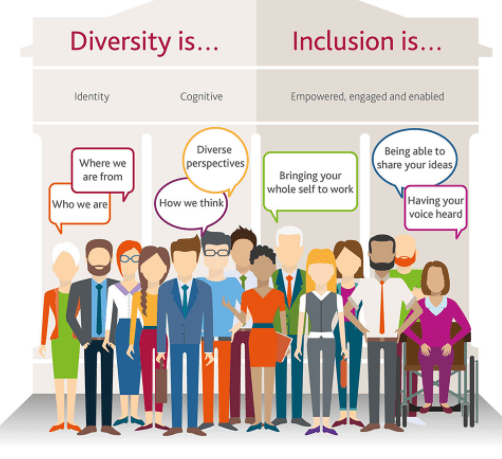
The day kicked off with Dr. Tony Byers discussing The Multiplier Effect of Inclusion. Engaging us with wit, humor and authenticity, Dr. Byers started by sharing a story from his childhood of being excluded, the lasting impact that feeling left on him and how the experience informs his work. Similarly to Maria Arcocha White, he briefly touched on how D&I work had been done for the past 40-50 years and how it needs to change.  Over time, he stated, counting heads became more important than making heads count. Organizations can be diverse without being inclusive but it’s inclusiveness that really gives them an advantage. To highlight this, he showed us the difference in outcomes between a cross-cultural group that is well-led and culturally competent vs. one that is poorly led. Guess which one performs better?

divinc

Using a 10 question activity he highlighted the implications for innovation and creativity when an organization lacks diversity and inclusion. Hint: There are no elephants in Denmark.  From there he went on to discuss the responsibility each of us doing work in the D&I space has for being a multiplier when it comes to inclusion. We have to take a leadership role in this push for change. How are we helping our organizations become/be/act differently if the answers to questions are always the same? Considering the impact of multipliers, we must ask ourselves what we will commit to doing to implement inclusiveness, not just diversity. My commitment is to develop and sustain an organizational culture in which everyone feels included, respected and valued. What’s yours?

KEY TAKEAWAYS:

  • The 3 C’s of Inclusive Behavior:
    • Curiosity – Thinking Differently
    • Challenge – Managing Personal Bias
    • Courage – Develop an Inclusive ‘Speak Out’ Culture
  • Diversity x Inclusive Behaviors x Innovation = Increased Market Success (Organizations with inclusive cultures outperform other organizations by 26%.)
  • Different voices lead to different ideas and different solutions.
  • We may not always get it right in our attempts to be inclusive but we can’t stop. (Example: Starbucks’ ‘Race Together’ campaign.)

FAVORITE QUOTE: Why do you have to have a business case to treat me right?

I attended two other sessions on Day 2 but they honestly deserve separate posts. Especially Dr. Steve L. Robbins who I could have listened to for HOURS. Stay tuned.

#NotAThoughtLeader


#SHRMDIV Day 1 : Change How You Think About Diversity & Inclusion

Despite having to wake up at the crack of dawn, nearly missing my connecting flight and fearing for my life on the taxi ride from the airport,  I FINALLY made it to San Francisco and the SHRM Diversity & Inclusion Conference in time for the afternoon sessions. At first glance, the two sessions I attended – Creating a Diversity Strategy Map: Converting Intangible Assets into Tangible Outcomes and Results and Inclusion: The Future of Diversity – didn’t have much in common other than both being about diversity. However, a similar idea ran through both sessions which was that we need to change the way we think about diversity and inclusion in order to be effective change agents.

The first session came from a data perspective – what we need to know, what we need to find out and how we need to convey that information to show and prove the ROI of D&I. There was a lot of math and formulas aka the necessary evils. The speaker, Dr. Edward E. Hubbard, stressed the importance of being able to show the impact D&I has on the bottom line (“organizations speak green”) using measurable, evidence-based data. As D&I professionals, we have to know what is needed by the organization from a business standpoint but also what the business needs from a D&I standpoint. He also stressed the importance of completing a needs analysis prior to developing a D&I strategy or initiative because “if there is no need, there is no benefit.”

KEY TAKEAWAYS:

  • A paradigm shift is needed in how we assess the utility of diversity.
  • Knowing what is important to the organization and what it wants to accomplish is key.
  • Diversity and inclusion initiatives must be measured by results, not activities.

FAVORITE QUOTE: You’re either at the table or on the menu.

The second session tugged more at the heartstrings than the purse strings. The speaker, Maria Arcocha White, started the session talking briefly about her experience growing up being teased because English is not her first language. She went on to discuss why we can’t stop at diversity but must focus on inclusion as well. In fact, her point of view is that the only way to get to true diversity in an organization is by starting with inclusion. Arcocha White gave us a bit of a history lesson on how organizational culture has evolved over time and explained how focusing on individuality is the first step in building the trust required to have genuine conversations.

KEY TAKEAWAYS:

  • Think beyond visible diversity i.e. race and gender.
  • Behave in ways that allow true diversity and inclusion to occur.  If people have negative perceptions of ‘diversity’ use different words.
  • Inclusion must be intentional.

FAVORITE QUOTE: Diversity is a fact; inclusion is an act.

Not related directly to sessions but I also had some really great conversations with vendors in the expo hall about the importance of employee happiness, being a straight ally and recruiting people with disabilities. All in all day one was a success. I expect nothing less from day two.

(Posted on SHRM Blog October 24, 2017)

#NotAThoughtLeader


MYTH: Teleworkers Aren’t Working

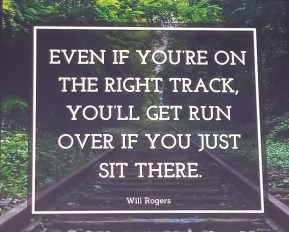
This topic has been on my mind for a while. I’m a huge fan of teleworking. HUGE. Or rather of giving employees the option to telework. It’s not for everyone and it doesn’t work for everyone- some people need more structure & guidance or don’t work well in isolation. It also won’t work for every job. However, I believe there are few office-based jobs that can’t be done from an alternate work site (AWS) at least some of the time with the right equipment. I have a hard time understanding why more employers aren’t on board with telework as a flexible work option. I’ve noticed some employers, even though they offer a telework option, place expectations on teleworkers that they don’t place on workers who are in the office.

tumblr_omedmchiYc1qjqn5qo1_1280

Every person I’ve spoken with (aka a slightly less than scientific study) who has at least one regular telework day tells me they are much more productive on those days, primarily due to not having to commute and there being fewer distractions. I also think teleworkers have a tendency to “overwork” so people in the office don’t think they’re slacking. This has always bothered me. Just because you may or may not be wearing pajamas doesn’t mean you’re slacking.

Why is there a perception that just because you aren’t at a desk in an office space your employer owns, you aren’t working as hard or as much? Heaven forbid you miss a call or don’t respond to an email immediately. Guess what – people miss calls and don’t respond to emails immediately when they’re in the office too. People play video games and login to Facebook and shop on Amazon and all kinds of other things IN THE OFFICE. I won’t even go into the amount of time wasted on meetings and random chitchat. Yet there’s this perception by many employers that in the office = working and not in the office = probably not working.

I always say the proof is in the pudding. Well, I don’t actually say that. Who says that? My point is, if a person is not performing or is under-performing, it doesn’t matter where they’re located. The proof will be in that they aren’t getting results or meeting their goals. People who aren’t motivated to work from an AWS probably aren’t that motivated to work when they’re in the office either. THAT is the real problem that needs to be addressed.

This is another one of those things that comes down to trust. Trust your people. If you don’t trust your people, think about why that is and what can be done to change it. Allow your people flexibility to the extent that it doesn’t pose a hardship to the business. If someone isn’t performing well outside of the office but performs well in the office, maybe teleworking isn’t for them. That’s OK. At least they were given the option. If someone isn’t performing in or out of the office, a conversation needs to be had surrounding that issue. Just please don’t assume that a person who is teleworking is not really working. Last, but certainly not least, please understand that teleworkers also need bathroom breaks, eat lunch, step away from the desk for a moment, might miss a call or not immediately respond to an email. Just like when they’re in the office. Don’t worry; they’ll get back to you. Just like when they’re in the office.

 work

#SHRM17 – ALL IN(SPIRED)

20170626_232854

Beignets from Sunday brunch at Blake’s on Poydras. DELICIOUS!

SHRM 2017 ended last week and I’m experiencing withdrawal. The people, the sessions, the music, the BEIGNETS! What’s not to love? If you missed it, you missed something big. Literally. It was the biggest SHRM conference ever! Between the concurrent sessions, the Smart Stage, the Take 10s and the General Sessions, you could soak up a wealth of information without even trying.


Many of the sessions I attended shared the common theme of building trust, shifting culture, HR influence and putting people first. This was deliberate as these are topics that really speak to me and that I believe in fully. (Full disclosure: I ended up in Richard Fagerlin’s session because I was tired of walking that behemoth of a convention center. It was a great session though and I’m glad I attended it.)

I have a ton of takeaways from SHRM17. (I concur with Steve Browne’s statement that if you leave a session without any takeaways, it’s YOUR fault, not the speaker’s.) Some of my favorites are below.

TRUST YOUR PEOPLE.

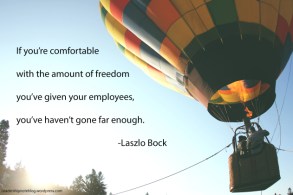
laszloIf you believe people are fundamentally good, you will treat them that way. (Laszlo Bock)
How many times have you encountered designated leaders who don’t trust the people they hire to do their jobs? You know who I’m talking about. The folks who want to micromanage their employees to death. Perhaps you are (gasp!) one of those people. If you are, stop it right now! That’s no way to inspire or motivate folks to be productive.

Another great Bock statement: FREEDOM IS FREE. Meaning, it costs nothing for you to allow your employees the freedom and autonomy to be effective. Let’s face it – if you don’t trust the people you hire, that says way more about you than it says about them.

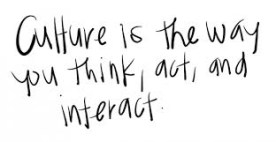
CULTURE IS THE SUM OF WHAT YOU PERMIT AND WHAT YOU PROMOTE.

culture

Another way to think about culture. Steve Browne said this in his session as well.

Consider the mic dropped.  This comment on culture from Richard Fagerlin’s session, Creating a Culture of High Trust : 10 Things Every Organization Must Do to Experience High Trust was probably my most retweeted tweet from the conference. Obviously it resonates.


We’ve all seen it. You have an organization that prides itself on its core values of  <insert  buzzwords of the moment> but in practice it’s a whole different story. They say they believe in diversity & inclusion, but the leadership team looks the same and thinks the same. They say they believe in innovation but new ideas are always shot down. They say harassment won’t be tolerated but a known harasser gets promoted because they are a high performer. They say they believe in work/life balance but pitch a fit if an employee has to leave early. I call shenanigans! Your culture isn’t what you say it is, it’s what it is.

Another good Fagerlin quote: EVERY ORGANIZATION IS PERFECTLY DESIGNED TO GET THE RESULTS IT GETS. Just let that marinate for a minute while thinking about some of your past (maybe present) work experiences. It’s all starting to make sense now, right? #MajorKey

THE KEY TO SUCCESSFUL LEADERSHIP IS INFLUENCE, NOT AUTHORITY.* 

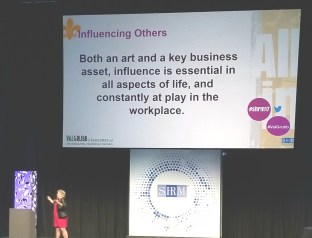
20170626_172813In her session, Influencing Others: 8 Steps to Get Results When You Don’t Have Direct AuthorityValerie Grubb spoke about how to influence others when you don’t have direct authority. Again, this really boiled down to trust. Trust and communication style.

In order to influence someone when you don’t have authority over them i.e. when you can’t say “because I said so,” they have to trust you (see above) and you have to communicate concisely. Speak to the WHY of what you’re trying to accomplish and gain a reputation for getting to the point. This is something I really need to practice. I can get wordy at times. (Don’t say it. LOL. Just keep reading.) WHEN TRYING TO INFLUENCE SOMEONE THEY HAVE TO HEAR YOU FIRST. If they don’t trust you, chances are they aren’t listening.

DON’T KEEP FOLLOWING THE RULES; CHANGE THEM!

20170626_172212You probably guessed this quote came from Steve Browne without me having to say it. He has a bit of a reputation as a rule breaker. In a good way. Make that a GREAT way. Steve is so freakin’ inspirational and his passion for HR and people is contagious.

I attended Steve’s Brand Name HR: Giving Your Function Life & Purpose session. He spoke a lot about pushing boundaries and not letting yourself (and your career) be confined to what HR is “supposed to do” or “should be doing.” We need to challenge the status quo and not be afraid to shake things up for the betterment of the folks we’re here to support.

We can’t be afraid to bring our whole selves to work and we must encourage others to do the same.  We spend too much time at work to have to shut off or hide major parts of ourselves during the workday. For example, I like to change my hair color a lot and I have visible tattoos. Neither of which impacts my ability to do my job. Get over it.

Steve also talked about HR being out and among the people as opposed to always making them come to us. I’m proud to say I do a pretty good job of this. The people are the reason I do what I do. Why would I want to keep my distance from them? I have never been “Ms. Stuffy, Scary, Uncaring HR lady” and I never will be. Let’s not be confined by others’ preconceived notions of HR. IF YOU’RE NOT MAKING PEOPLE UNCOMFORTABLE YOU’RE NOT DOING YOUR JOB. (Thanks for the reminder, Steve!)

20170619_223633

IRL connection w/ @tgweeded – photobomb courtesy of @cescobar78

This was just a small taste of my #SHRM17 experience. There’s no way I can cover it all in one blog post. However, I would be remiss if I didn’t mention how fabulous and fun it was to make IRL connections with the folks I know from #nextchat. (Not familiar? Get into it! Every Wed. 3pm EST on Twitter.) It was so great to put a human-sized face to a tiny Twitter avatar face and take our conversations offline. That was easily one of the best parts of the conference.


So SHRM17 has come and gone. Beignet cravings notwithstanding, I’m excited about sharing and implementing what I learned and continuing to connect with other HR professionals, online and off. I went ALL IN and came out truly INspired. Kudos to the entire SHRM team for a WONDERFUL conference!! I hope to see everyone at #SHRM18 next year. (I wonder if there’s any chance of having a batch of beignets shipped to Chicago.) 

BONUS ROUND: If you attended SHRM17, share your favorite part in the comments and/or reach out to me on Twitter @tmrasberry.

*Ken Blanchard quote

(Posted on SHRM Blog June 28, 2017)

#WorkHuman 2017 – Bring Your Whole Self!

workhuman-2017If you follow me on Twitter (and you should 😉 ) you know I’ve been super excited for the past few months about attending the WorkHuman conference (May 30-June 1.) Ever since I first heard it was a thing – a conference dedicated to creating better work environments through culture & engagement – I knew I wanted to be there. Thankfully the opportunity presented itself for me to attend. Now, in just a few days, I’ll be in Phoenix, AZ, in a nice, air-conditioned conference center listening to folks talk about the workplace of the future – a human workplace – the type of workplace I want to cultivate.

For the past few days I’ve been trying to decide which sessions to attend. There are so many intriguing ones to choose from on my favorite topics like culture, engagement, diversity and recognition. I’m still not 100% sure which ones I’ll choose but I know I can’t go wrong with any of them. The keynote speakers alone are enough reason to attend. Among them are Susan Cain, the patron saint of my people aka introverts, Julia-Louis Dreyfus (Elaine, Old Christine, VEEP) and literally last but never, ever least (Former) First Lady Michelle Obama.  It’s gonna be hot in Phoenix, inside and out (triple digit temps)!

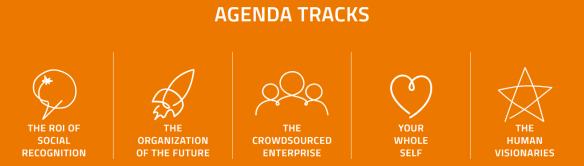
whtracks

If any of this sounds interesting to you, there’s still time to attend. You can register onsite! Need more convincing? See below.

“In just three information- and inspiration-packed days, you’ll gain the knowledge and tools you need to unlock the energy of your workforce, increase engagement, and help your company achieve its full business potential. You’ll leave energized and ready to forge a more human work culture in your organization.”

Plus..networking with hundreds, maybe even thousands, of other HR and HR-adjacent professionals. And me. What more could you ask for? Join us!

P.S.- If you can’t make it this year, follow the fun on Twitter: @workhuman, @globoforce, #workhuman and be sure to check out my recap afterwards.

#HR: Let’s Lead the Way in Promoting #MentalHealth Awareness

So…it’s been a long minute since I published a blog post. I have several draft posts on topics I really wanted to share with my legions of readers (lol) but for some reason, I’ll get halfway through and stop. Then weeks will go by and I feel like it’s not fresh anymore. For example, I STILL have a draft post about #SHRM16 – as I’m preparing to attend #SHRM17 next month. I know, I know.

1in5

According to the National Alliance on Mental Illness (NAMI,) 1 in 5 Americans is affected by a mental health issue.

At any rate, I’m hitting ‘publish’ on this one for sure because the topic is near and dear to me on both a personal and professional level. Mental Health. MAY IS MENTAL HEALTH MONTH. Having been personally affected by mental illness and super aware of the impact it can have on life activities, I am hyper vigilant about others taking care of their own mental health. This, of course, extends to my co-workers/colleagues, or as I like to call them “my people.” I believe HR professionals are in a unique position to promote positive mental health; however, this in no way lets leadership and management off the hook.

A few days ago I sent an all staff email about mental health awareness which included a few mental illness stats, a reminder about the Employee Assistance Program and the availability of mental health professionals through our insurance plan. I work at a nonprofit and I love a good “mission-driven organization” as much as the next person but I also realize the tendency for many employees to be underpaid, overworked, overwhelmed and stressed out trying to fulfill that mission.

Stress is a leading cause of chronic health problems, both mental and physical. If you are already dealing with a mental illness, it will only exacerbate the issue.

In the workplace, this has an impact not only on the individual, but on teams, departments, working relationships, morale, benefits costs, absenteeism, and the bottom line. In other words, it would behoove ANY employer to take this issue seriously. As HR professionals especially, we have to always remember that our employees are people first and deal with a plethora of issues that don’t just go away during work hours.

Offering an EAP is a great first step but we also need to genuinely care about our employees and create supportive environments in which people can be their best selves and therefore utilize their knowledge, skills and abilities (i.e what we hired them for) to their best capabilities. Of course I’m not saying there won’t ever be bad days, stressful periods, times when everyone is stretched a bit thin, etc, but these should be the exception, not the rule.

Mental Health Facts 2017

(Infographic – Mental Health America)

Your assignment today, my fellow HR professionals, is to educate your colleagues and organization leadership on the importance of mental health awareness (not just this month but on a consistent basis,) provide resources for employees to get help (if not already doing so,) and work to create (or maintain should you be so lucky) a  stigma-free workplace.

Remember, there’s no health without mental health.

Resources:

National Alliance on Mental Illness

Mental Health America (provides an employer toolkit)

National Institute of Mental Health

nostigI have #NoStigmas

WordsMatter: The Power of Language at Work

I was inspired to write this post for a few reasons. I recently listened to a webinar titled “The State of Performance Management: What’s Broken and How to Fix It” and I found myself agreeing with a lot of what was being said. More than a lot actually. Pretty much all of it.

The presenter, Kevin Eikenberry, explained that one of the main things wrong with performance management is the term itself. To paraphrase him, we use terms like performance management/evaluation/review/assessment but people don’t want to be managed, evaluated, reviewed or assessed. The terminology alone puts people on the defensive, and leads to anxiety and stress. Who needs more of either? Do you? I certainly don’t. So ultimately it doesn’t get done or it keeps getting put off until the last minute and then it’s done half-heartedly and the results are worthless.

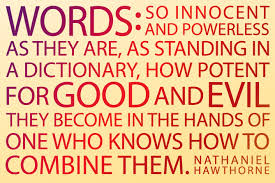
words matterHe suggested that instead we use the term Performance Development. Makes sense, right? After all, the process should, ideally, be designed to assist employees in knowing what they’ve done well and making them aware of areas for professional development. The process should also include a plan (i.e. action items) for that development to occur. The process should be positive, or at the very least not negative or demeaning and above all it should be useful. A phrase I read recently in regards to providing feedback is that it should be personalized but not personal.  I agree.
We hear a lot these days about the death of the traditional performance review. Well, that’s a death I won’t be mourning. The terms currently used (see above,) and thus the associated processes, tend to be neither positive nor useful. When people are told they are being managed, evaluated, etc. it automatically puts them in the mindset of being subordinate. When someone is tasked with managing, evaluating, etc. another person, it automatically puts them in the mindset of that person being subordinate to them.

Subordinate (definition):

  1. lower in rank  or position 
  2. a person under the authority or control of another within an organization
  3. treat or regard as of lesser importance than something else

Eeek! Unless you’re in the military or in prison this dynamic sounds pretty undesirable and unnecessary to me. Should there be some type of objective metrics to gauge performance as well as strengths and opportunities for development? Sure. But the process needs to change and it starts with the nomenclature.

Don’t even get me started on rating (for lack of a better term) people on expectations that aren’t clearly defined. (Meets or exceeds? How about what are they?? ) Or rating based on the recency effect i.e things that happened a short time prior to when the review is being done vs. the entire review period. (Great all year but made a mistake last month? No soup for you!) Or subjectivity vs. objectivity. (Self-explanatory.) There is a lot to talk about but this post is about words.

Another thing that inspired me to write this post was my own 2015 “performance evaluation.” I reread it the other day in preparation for the 2016 version. To say I took issue with quite a bit of it would be an understatement. Not because I think I have no room for improvement or can’t take constructive criticism, but because most of the criticisms weren’t actually constructive. They were primarily personal and subjective judgments rather than objective, work-related statements that could be supported by facts or examples.

This may sound like hyperbole but when I asked for examples of stated actions/behaviors that I considered to be negative I didn’t receive any. Not. Even. One. When I explained what the words being used to describe me implied, I was told “I didn’t mean that, I meant this.” However, that is what was written down and what will be attached to my employment file, without further explanation or clarification. So yeah, I was none too happy about the whole thing and I’m not looking forward to doing it all over again.

wordsI also got to thinking about the general terminology we use to describe relationship dynamics in the workplace. Boss. Manager. Superior. Subordinate. (See above.) Who came up with these?? I have never and will not ever refer to another person as my boss or superior. I’m just not built that way. In using those types of terms you are subconsciously (consciously, for some) indicating that a person is better than you and/or has power over you. Some people may be fine with using those terms but in my opinion, it’s an unhealthy dynamic. As you think, you will speak. As you speak, you will do. Ever heard of the phrase, speaking truth to power? Well, when the words you use are demeaning to yourself or others, those words will manifest as beliefs and actions.

Some may say I’m taking this too far but think about it. If you are currently using any of these terms in the workplace, try to stop using them, in both written and verbal communication. Remove them from official documentation, policies and procedures. When people stop hearing and seeing these and other similar words that denote an unnecessary and unbalanced power dynamic, I believe we will see a significant shift for the better. (Hierarchy may be necessary for the purpose of organizational structure but that doesn’t mean it has to be part of the organizational culture.)

Your assignment, should you choose to accept it, is to be a change agent and turn your performance management process that doesn’t work (trust me, it doesn’t) into a performance development process. I’m sure morale and productivity among your employees will begin to improve, even if it isn’t bad to start with. And if it doesn’t, at lease you tried. If it’s not within your purview to change terminology and processes and/or shift culture on an organizational level, try doing it on a department level or on a team level. Whether you effect change on an organizational, departmental or individual level, every journey begins with a single step. Never forget, WORDS MATTER.

8 Unsettling Facts About Bad Bosses

We spend so much of our days, our LIVES, at work. In a perfect world, we’d all have great managers, wonderful co-workers, exciting and fulfilling jobs, fair and competitive pay, flexibility, etc. Unfortunately, all too often, this is not the case. If we’re lucky, we may have one or two of these things; but having ALL of them is rare. When people begin to feel that what is missing > what is present or that what is missing (or present) is too much to bear, they start to look for employment elsewhere. It’s only natural. Continue reading