11 Reasons You Should Have Friends at Work

how-to-make-friends-at-work-6-638We all know people who aren’t the least bit interested in having friends at work. You know the ones. The “I have a life outside of work; I don’t need/want to make friends here” camp. To an extent, I get that. Especially if you work with folks you would never dream of knowing, let alone hanging out with, if you didn’t have to see them at work. There are also workplaces that frown on and discourage employees establishing friendships for various reasons which typically boil down to fear and lack of trust.

However, I am of the mindset that we spend so much of our time at work – one might even say TOO much- that making a deliberate effort not to build friendships there seems counterproductive. Of course, I don’t believe in forcing relationships either. If a connection isn’t there, it isn’t there. But if there’s the potential, why not let it happen?

As it turns out, there are also some great data-driven reasons (HR folks love metrics) for establishing friendships at work – see below. Perhaps the final statement is the most important – Office friendships have a direct link with engagement and productivity. Who wouldn’t want to be more engaged and productive at work?  Who wouldn’t want their employees to be more engaged and productive at work? Seems like a no-brainer to me.

16157

Put an End to the Secret Job Search

I recently had a conversation with a recruiter in which he told me he doesn’t advise his clients who are employed to post their resumes on job boards because their current employer may see it. I’m not a fan of indiscriminately posting ones resume online either but not for that reason. I just don’t happen to believe utilizing the major job boards is the best, most efficient method of finding a job.

Of course this conversation wasn’t the first time I’d heard someone suggest that a job seeker should keep their job search under wraps for fear of repercussions from their current employer. The irony being that an employer that would penalize an employee for job hunting i.e. wanting to find a position that utilizes his/her knowledge and skills, pays well, offers professional development opportunities, is fulfilling, etc. can probably blame itself for driving the employee to look for another job in the first place. What’s wrong with seeking a better opportunity? Why should this have to be done in secret?

Going back to my point about the major job boards, why throw your resume up and see what sticks when you can do something that makes a lot more sense and will be a lot more effective – utilize your networks. When I am looking for a job, I am not shy about letting it be known. You never know who might have just the right connection or opportunity. I also utilize social media – primarily LinkedIn and Twitter – and I would encourage any job seeker to do the same. You won’t do yourself any favors by limiting your search to posting your resume in anonymous mode on some huge job board.

As for employers, if you find out an employee is seeking employment elsewhere, don’t get mad. Employees who are dissatisfied tend to be less productive, so they may be doing you a favor. If the employee is a top performer, consider what, if anything, could be done to encourage them to stay. If there’s nothing to be done, wish them well and thank them for the service they provided to your organization when they move on to the next opportunity. Don’t behave like a petty, childish teenager and start treating the employee poorly i.e. not inviting them to meetings, keeping them off projects, etc.

We have to remember that people are not property. Employers do not own their employees. People have varying motivating factors and they don’t remain the same forever. There is absolutely no reason a person should have to sneak around simply because they seek a better or different employment opportunity. This is not a bad thing. Secrets, lies, dishonesty, lack of transparency and poor communication – those are bad things. A great place to work would not encourage those characteristics and behaviors in its employees, no matter how long they plan on staying. A not-so-great place to work shouldn’t be surprised someone is seeking other employment and should focus on retention vs. retaliation.

The Role of HR Has Evolved

I came across this cute little video from LinkedIn Talent Solutions about how the role of HR has evolved. “Today, the role of HR in an organization is no longer functional, it is transformational.”

I agree with this. It’s so important for HR professionals to be more than paper pushers and policy enforcers. It’s a whole new world. The best employers are allowing HR to help them build and maintain a stand-out employer brand in addition to attracting and retaining top talent via policies, benefits and all the other “traditional” HR functions.

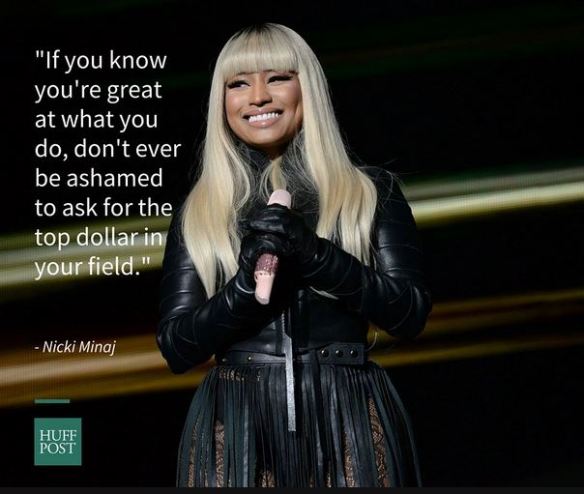
Life Lesson: Know Your Worth

Knowing your worth is critical in both your professional and personal life. Don’t ever be afraid to command the pay, respect, time, acknowledgement, etc. you know you deserve. Don’t let others’ perceptions of you change your perception of yourself. When you KNOW you’re great – act like it!

nminaj


How Did I Get Here? Where Am I Going?

People often ask me how I got started working in Human Resources or Social Media or in the nonprofit sector. I kind of “fell into” both fields but I made a conscious decision to work with nonprofits. Since I get some version of this question almost weekly, I figured I’d share my story here. 
Continue reading

SHRM-CP EXAM RESULTS

Today I saw my SHRM-CP certification exam results. I knew I had passed but I wasn’t expecting to see a synopsis of my performance. They break the results down into categories: areas for improvement (yellow,) competence (gray) and strengths (blue.) It’s not often that one receives this type of professional feedback. I imagine this information would be especially helpful to those who need to retest; but it’s also good to know in general. I’ll admit, it feels good to see that yellow section blank. 🙂

shrmcertresults

8 Unsettling Facts About Bad Bosses

We spend so much of our days, our LIVES, at work. In a perfect world, we’d all have great managers, wonderful co-workers, exciting and fulfilling jobs, fair and competitive pay, flexibility, etc. Unfortunately, all too often, this is not the case. If we’re lucky, we may have one or two of these things; but having ALL of them is rare. When people begin to feel that what is missing > what is present or that what is missing (or present) is too much to bear, they start to look for employment elsewhere. It’s only natural. Continue reading

Leave Policies Reflect Level of Trust in Employees

Recently a UK company made headlines by announcing it would offer paid leave to women who are having their periods. See here: http://bit.ly/1Pdvdp8

I first saw the article posted in an HR group and all the comments I read focused on how difficult this would be to track/validate and how employees were bound to “abuse” the leave.

While I do understand the HR professional mindset behind needing to track everything, being in compliance, etc., I have always taken issue with the belief that the majority of  employees will take any opportunity to  “abuse” their leave. If an employee has accrued (or become otherwise eligible) for leave, how is using it abusing it? If an employee has 52 days of sick leave and they take one day a week for a year, are they abusing it? Even though they’ve earned it? Isn’t that what it’s there for? Hmm..

I believe an organization’s leave policies and attitude towards usage of leave mirror their level of trust in their employees and reflect their organizational culture. Employers worry about “leave abuse” when they know their employees may not enjoy coming to work. Toxic environments lead to low morale which leads to less productivity, more health issues (physical and mental) and in turn more time away from work. In environments and cultures where employees don’t dread going to work, this is not a concern.

I’ve read several articles stating that employees tend to take less leave at companies that have unlimited leave policies. The employers trust their employees to get their work done and take leave when they need to, for whatever reason, and in turn the employees are productive without having to worry about how best to use their limited leave or what to do when unexpected situations arise.

Going back to the original article, I’m sure that organization has fostered an environment in which they can trust their female employees to utilize the “period leave” as needed and not to “abuse” it. I’m sure the women who work there who could use the leave appreciate their employer caring enough to offer it and in turn, will be happier and more productive knowing that they won’t have to worry about their jobs simply because of a natural body function.

I’m not saying this would work for all employers or that all employers should offer it. But I do believe it’s a great example of an “employee first” culture and we need more of those.

P.S.- It isn’t lost on me that this company is not in the U.S.

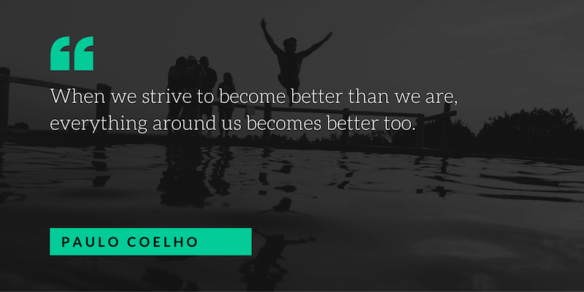
#MotivationMonday: Paulo Coelho

paulo-coelho-motivational-quote

This quote is a great reminder of how our attitudes and actions impact our environment. This is true for both our personal and professional lives.

Life Lesson: Do What You’re Doing While You’re Doing It

I think at some point in time we’ve all read a quote, watched a YouTube video, seen a tweet or Facebook post and thought “Wow, this really speaks to me. I needed to see/hear that today.” It’s as if the universe knew what you needed right at the moment and gave it to you. Well, this HuffBlackVoices video with Tracee Ellis Ross was that thing for me today. Continue reading